

Imagine walking into your local newsagent to buy a newspaper and a pint of milk. Before the person behind the counter hands over your change, they demand to see your family photo album, ask for a complete list of your friends’ phone numbers, and want to know exactly which aisle you stood in for the last three minutes.
You would think they had completely lost their marbles. You’d leave the milk on the counter and walk straight out.
Yet, we allow this exact behaviour every single day the moment we unlock our smartphones or tablets. We download a simple recipe app, a digital crossword, or a local weather tracker, and before it even opens, it starts barking demands at us: “Allow this app to access your location?” “Allow this app to access your contacts?” “Allow this app to track your activity across other companies’ apps?”
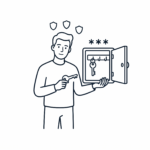
It is the digital equivalent of a curtain-twitching busybody leaning over the garden fence to inspect your washing line. You don’t have to tolerate it. Here is how to put a padlock on your device and tell these nosey apps to mind their own business.
Why Does a Torch App Need to Know Where I Live?
When you install an app, it will often ask for “permissions.” This is tech-talk for asking to borrow the keys to different rooms inside your phone.
Sometimes, these requests make perfect sense. If you download WhatsApp to send a picture of the grandkids to your daughter, the app genuinely needs permission to look at your camera and your photo album to send the file. That is fair enough.
The Problem: Many apps demand access to parts of your phone they have absolutely no business touching. A basic torch app or a digital jigsaw game does not need to know your exact GPS location, nor does it need to see your calendar.
They ask for these things for one simple reason: Data is money. If a free app can quietly track that you spend every Tuesday morning at the local garden centre or the golf club, it can sell that information to advertising companies who will then bombard your screen with adverts for lawnmowers and golf clubs. It’s cheeky, it’s invasive, and it drains your phone’s battery to boot.
Three Steps to Reclaim Your Privacy
You don’t need to throw your smartphone in the wheelie bin to stay private. You just need to change the rules of engagement.
1. The “Only While Using” Compromise
When an app asks for your location, you are usually given three choices: Always Allow, Only While Using App, or Don’t Allow.
Never choose “Always Allow.” That gives the app a permanent hall pass to track your movements even when your phone is slipped away in your trouser pocket or handbag. For things like navigation maps or weather apps, choose “Only While Using.” For everything else—games, calculators, or shopping apps—be ruthlessly blunt and click “Don’t Allow.” They will still work perfectly fine without knowing where you are.
2. Turn Off the “Cross-App Tracking”
If you use an Apple iPhone or iPad, you have a magnificent secret weapon. A prompt will often pop up saying, “Ask App not to Track.” Always click this button. It tells the app in no uncertain terms that it is strictly forbidden from following you outside its own front door. It stops the creepy phenomenon of looking at an armchair on John Lewis and then seeing that exact armchair pop up inside your digital scrabble game ten minutes later.
3. Conduct an App Eviction
We are all guilty of downloading an app to check a train timetable or look at a restaurant menu once, and then leaving it sitting on our screen for three years. Those dormant apps can still quietly run in the background, gossiping with advertising servers.
Take five minutes to scroll through your phone. Find any app you haven’t used in the last month, press down on it, and hit Delete. If you need it again next year, you can fetch it back in thirty seconds—but until then, evict it from your private property.
The Bottom Line
Our smartphones are brilliant inventions that keep us connected to the people we love, but they should be our loyal servants, not corporate double-agents reporting our every move back to a server in Silicon Valley.
Setting your app boundaries isn’t being paranoid; it’s just basic digital housekeeping. You wouldn’t invite a stranger to sit in your living room and read your address book, so don’t let them do it through a glass screen either. Stand your ground, keep the curtains drawn, and let the Wise Old Heads keep their business to themselves.
Our searchable WiseOldHeads library is packed with helpful advice, jargon-free consumer guides designed specifically to protect your cash and your peace of mind. Leverage our search bar below to stay one step ahead of the corporate giants.






Leave a Reply