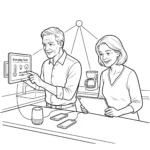
Let’s be honest: half of the gadgets pushed on us these days are completely over-engineered solutions to problems we didn’t know we had. No one actually needs a washing machine with Wi-Fi or a fridge that sends text messages.
In this section, we cut through the high-tech nonsense to focus entirely on the tools and devices that genuinely make your daily life easier, more comfortable, and a bit more efficient. Whether it’s taming a stubborn smart TV, getting the most out of your tablet, or using simple technology to shave a few pounds off your utility bills, we provide straightforward, plain-English guidance. No confusing user manuals, no patronising tech-talk—just practical ways to make modern technology work for you, on your own terms.
Technology seems to get smaller, sleeker, and harder to read every year, leaving those of us who prefer actual buttons out in the cold. This guide highlights five practical, high-visibility gadgets designed with large buttons, high-contrast screens, and straightforward controls that remove the guesswork from staying connected at home.
High-Contrast Keyboards & Simplified Tablets
If typing out an email feels like attempting microfiche decipherment through a foggy window, a high-contrast backlit keyboard is a total game-changer. These keyboards feature oversized yellow keys with high-visibility black lettering, illuminated from underneath so you can actually see what you are typing without squinting under a desk lamp.
For general browsing, video calling, and photo sharing, standard laptops can often feel overcomplicated. Senior-focused tablets—such as those made by Doro—swap out cluttered menus for giant, action-based icons like “Send Email”, “View Photos”, or “Video Call”. They offer extra-bright screens, loud front-facing speakers, and simplified touch interfaces that respond reliably without requiring a degree in computer science.
Amplified Phones, Big Remotes & Clear Clocks
Nothing ruins a quiet evening faster than missing a landline call because the ringer was too faint, or accidentally changing the TV input to a blank screen using a remote with fifty microscopic buttons. Amplified home phones solve this with extra-large keys, adjustable volume boosters, and direct-dial picture buttons so you can ring family with a single tap.
Pairing your TV with a simple, universal big-button remote allows you to banish those tiny, useless buttons forever, leaving you with just Power, Volume, and Channel controls. Finally, high-visibility digital calendar clocks display the full day, date, and time in massive text, keeping your daily schedule crystal clear without requiring you to decipher a tiny wrist watch.
WiseOldHeads Advice
Choose high-contrast backlit keyboards with yellow keys for effortless typing.
Opt for dedicated senior tablets with simplified, high-visibility icon menus.
Look for amplified phones with direct-dial picture memory buttons.
Replace complex TV remotes with simple 6-button universal alternatives.
Install a large digital calendar clock to track dates and reminders easily.
There was a time, not so very long ago, when watching television in Great Britain was a beautifully simple, civilised affair. You walked over to a substantial wooden cabinet, pressed a satisfyingly heavy plastic button marked “BBC1,” twisted a knob to adjust the volume, and sat back down on the settee.
If you were feeling particularly modern, you eventually upgraded to a machine with a single, clear remote control that had numbered buttons from 1 to 9.
Fast forward to today, and sitting down to watch the 6 o’clock evening news has been transformed into a high-stress administrative headache. You look down at your coffee table, and you are confronted by a confusing array of three or four entirely different plastic clickers.
There is the main TV remote, a secondary remote for the Sky or Virgin Media box, a tiny black wand for an Amazon Fire Stick, and a heavy, brutalist gadget for the audio “Soundbar.” If you press the wrong button in the wrong order, the entire system locks up, the screen goes completely black, and a patronising message pops up saying: “No Signal on HDMI 2.” It is enough to drive a saint to distraction. Here is why modern TV setups are an absolute shambles, and how to tame the beast without losing your temper.
The Modern “Input” Confusions
The root cause of this living room madness is that modern televisions are no longer actually televisions. They are just giant, dumb computer monitors.
Instead of receiving a signal directly through a traditional aerial on the roof, your TV is trying to juggle signals from multiple different boxes plugged into the back of it via little black cables called HDMI leads.
[ Your Television Screen ]
       |
       +--- HDMI 1: Sky / Virgin Box (The regular channels)
       |
       +--- HDMI 2: Amazon Fire Stick / Apple TV (The internet apps)
       |
       +--- HDMI 3: Soundbar / Audio System (The volume)
Because each box requires its own separate brain to function, they all come with their own separate remote control. To watch a simple programme, your hands have to perform a frantic musical symphony across three different pieces of plastic just to change the channel, boost the volume, and switch the correct “Input.” It is a dreadful piece of design that completely ruins a relaxing evening.
📋 The Wise Old Head Guide to Living Room Harmony
You do not need to live in a state of permanent confusion, and you don’t need to text your grandkids to come over and fix the TV every Friday night. You can simplify the entire setup using three practical tricks:
1. Embrace the “Universal Remote” Solution
You can bypass the clutter entirely by purchasing a single Universal Remote Control (brands like One For All make excellent, inexpensive versions for around £15). These clever gadgets allow you to program a single remote to speak to your TV, your Sky box, and your soundbar simultaneously. You can set it up so that the big central volume buttons always control the audio system, while the channel buttons control the television box. You can then throw the other three remotes into a drawer and never look at them again.
2. Label the Inputs with Real Tape
If you prefer to stick with your current remotes, clear up the confusion using a physical cheat-sheet. Take a small strip of white masking tape, stick it to the back of each remote, and write its exact job with a permanent marker (e.g., “TV POWER ONLY” or “VOLUME ONLY”). Write a simple three-step instruction card and laminate it, placing it under the coaster on your side table. There is no shame in having a user manual for your own living room.
3. Turn on “HDMI-CEC” (The Magic Settings Trick)
Deep inside your television’s settings menu lies a hidden feature with a boring technical name called HDMI-CEC (different brands call it things like Anynet+, Bravia Sync, or Simplink). If you turn this setting “On,” it forces your TV and your streaming boxes to talk to each other through the cables. When you press the power button on your Sky or Amazon remote, the television will automatically turn itself on and switch to the correct channel without you touching the main TV remote at all.
The Bottom Line
Entertainment is supposed to be a form of relaxation, not a test of your technological endurance. You didn’t survive decades of hard work just to be bullied by an HDMI port in your own living room.
Take an afternoon to audit your coffee table, consolidate your remotes, label your gadgets, and reclaim the simple pleasure of sitting down to watch a programme without needing an IT degree to turn the sound up. Keep it simple, keep it functional, and turn the box back into a civilised appliance.
Our searchable WiseOldHeads library is packed with helpful advice, jargon-free consumer guides designed specifically to protect your cash and your peace of mind. Leverage our search bar below to stay one step ahead of the corporate giants.
If you have ventured into a high street pub, a trendy café, or a city-centre restaurant recently, you have likely encountered a highly irritating little piece of modern technology stuck to the corner of your wooden table.
It looks like a small, white square filled with a chaotic explosion of black digital dots. It is called a QR Code.
You sit down, looking forward to a nice, heavy, cardboard menu that you can perused at your leisure. Instead, a young waiter bounces over, points a finger at the sticker, and says, “Just scan the QR code to view the menu and pay, mate.”
Suddenly, your relaxing afternoon out is transformed into an impromptu technology exam. You have to fish out your specs, pull out your smartphone, open the camera app, hover over the table like a surveyor checking a building foundation, and wait for a tiny internet link to pop up. Then you are forced to spend ten minutes pinch-zooming into a microscopic PDF screen just to see how much they are charging for a jacket potato. It is a dreadful, anti-social nuisance. Here is why the QR code craze is a massive step backwards, and how to handle it like a proud, dignified traditionalist.
The Hidden Trap Behind the Little Square
The hospitality industry will tell you that QR codes are “convenient” and “eco-friendly.” Don’t believe a word of it. They love them for two cynical reasons: it allows them to hire fewer waitstaff to take your order, and it allows them to collect your data.
Many of these QR code systems won’t just let you look at the food; they force you to type in your name, your email address, and your credit card details before you can even order a bowl of chips.
The Privacy Catch: The moment you fill in those boxes, you are signing up for their marketing database. For the next six months, your email inbox will be bombarded with junk messages offering you “10% off burgers on a rainy Tuesday.” Furthermore, if the restaurant’s website gets hacked, your payment details are sitting on a server completely exposed.
📋 The Wise Old Head Guide to Fighting Back
You do not have to bow down to the digital sticker on the table. You are a paying customer, and you have total authority over how you spend your cash.
1. Demand the “Physical Alternative”
The moment a member of staff tells you to scan the table, look them firmly in the eye with a polite, pleasant smile and say: “I don’t use smartphones in restaurants. May I have a traditional, printed menu, please?” Legally and commercially, almost every establishment keeps a small stack of real, physical paper menus hidden behind the bar for emergencies, elderly patrons, or licensing inspectors. They will almost always trundle off and fetch one for you. If they claim they don’t have one, feel free to stand up and walk out. There are plenty of wonderful, traditional establishments that still value real service.
2. Make Them Do Their Job
If you can view the menu on your screen but the app demands you enter your bank details to order a drink, simply close the page. Wave a waiter over, point to the screen, and say, “I’ve chosen what I want, but I’d like to pay a human being with a real card machine, please.” They are not allowed to refuse your payment.
3. Watch Out for “QR Code Poisoning”
If you do use QR codes in public places—like on a parking meter or a bus stop—always run your thumb over the sticker first. Scammers have taken to printing out their own fake QR code stickers and pasting them directly on top of the official ones. When you scan it to pay for your parking, your money goes straight to a thief, and you still end up with a parking ticket from the council. If the sticker looks peeling, off-centre, or suspicious, walk away and pay at the machine.
The Bottom Line
Going out for a meal or a drink is supposed to be an escape from screens, notifications, and administrative hassle. It is an opportunity to look your friends or your spouse in the eye and have a civilised conversation.
Don’t let trendy restaurant executives turn you into an unpaid data-entry clerk just to get a pint of bitter and a sandwich. Put the phone away, ask for a proper piece of paper, and let the Wise Old Heads keep dining with dignity.
Our searchable WiseOldHeads library is packed with helpful advice, jargon-free consumer guides designed specifically to protect your cash and your peace of mind. Leverage our search bar below to stay one step ahead of the corporate giants.
There was a time, not so very long ago, when buying a new car was a wonderfully mechanical experience. You looked for a comfy seat, a smooth gearbox, a boot big enough for the weekly shop, and a heater that could clear a frosted windscreen in under five minutes. When you got behind the wheel, everything made sense. If you wanted to turn on the headlights, you twisted a solid switch. If you wanted a bit of fresh air, you rolled down the window.
Today, visiting a car showroom is more akin to shopping for a spaceship.
The motor industry has decided that what we all secretly wanted wasn’t a reliable vehicle to get us to the garden centre, but a giant, rolling iPad. They have stripped out the solid, dependable buttons we’ve used for generations and replaced them with glossy, fingerprint-smudged touchscreens and software that requires an IT diploma to understand.
Worst of all, these modern vehicles seem to suffer from a permanent state of high anxiety. They beep, chime, flash, and vibrate at the slightest provocation. Here is a look at why modern car technology has lost its way, and how to survive the tyranny of the modern dashboard.
The Danger of the Dashboard Touchscreen
The biggest culprit in modern vehicle design is the total elimination of the physical dashboard dial. In the name of “sleek minimalism,” manufacturers have hidden basic, essential cabin controls deep inside computer menus.
Let’s apply some basic road safety common sense here. If you are driving down a dual carriageway at 60mph on a rainy Tuesday afternoon and your feet are getting a bit chilly, you should be able to adjust the heater by touch alone. Your hand goes to the dashboard, finds the familiar ridges of the dial, turns it to the right, and your eyes never leave the road.
The Modern Nightmare: In a modern car, adjusting the temperature requires you to look away from the road, tap a glossy screen to open the “Climate” app, navigate past a software update notification, and repeatedly press a tiny digital arrow on a glass panel. It is an absolute safety regression disguised as progress. Glass has no texture; you cannot operate a touchscreen by feel.
🛑 Driving a Mobile Panic Attack
Then, we have the endless barrage of electronic “driver assistants.” Modern cars are packed with cameras and sensors that are supposedly there to keep us safe, but mostly succeed in inducing mild cardiac arrest.
If you dare to venture within two feet of a hedge on a narrow country lane, a siren goes off. If you pull over slightly to give a cyclist a wide and polite berth, the steering wheel violently yanks itself out of your hands because the car thinks you are drifting across lanes. If you dare to start the engine before clicking your seatbelt into place to move the car three yards down your own driveway, the dashboard emits a frantic, high-pitched scream as if the vehicle is about to detonate.
We didn’t survive decades of driving without a single scrape just to be hollered at by a piece of software because we drove past a particularly large leaf.
📋 Three Ways to Quiet the Electronic Nanny
If you have upgraded your car recently and feel completely bullied by your dashboard, you do not have to just grin and bear it. You can take back control of the driving experience with a few practical adjustments:
Locate the ‘Hard’ Shortcuts: Many manufacturers have started to realise they went too far with touchscreens. Look closely below the screen or on your steering wheel; there are often small physical buttons marked with a windscreen icon or a home symbol that act as a bypass, jumping you straight to the screen you need without digging through menus.
Dive into the ‘Assistance’ Menu: When you are safely parked on your driveway, spend ten minutes exploring the settings menu. Look for Driver Assistance. In almost all modern cars, you can significantly dial down the sensitivity of the lane-keeping alarms and proximity beepers, or turn them off entirely so they only activate when you actually need them.
Master the Voice Button: Almost every modern car steering wheel now features a button with a little icon of a speaking face. Press it and speak clearly in your normal voice: “Set temperature to 21 degrees” or “Tune radio to BBC Radio 4.” It feels a bit silly talking to a dashboard at first, but it keeps your eyes firmly on the tarmac where they belong.
The Bottom Line
A car is an appliance designed to give you freedom, independence, and mobility. It should be a loyal servant, not a nagging passenger that spends the entire journey shouting corrections at you.
The next time you change your vehicle, vote with your wallet. Look past the flashy digital screens and the sales representative’s enthusiastic pitch about “cloud connectivity.” Sit in the driver’s seat, make sure you can turn the radio down and the heater up using real, honest-to-goodness plastic buttons, and tell the showroom that you want a machine built for drivers, not computer programmers.
Our searchable WiseOldHeads library is packed with helpful advice, jargon-free consumer guides designed specifically to protect your cash and your peace of mind. Leverage our search bar below to stay one step ahead of the corporate giants.