
Category: Health & Wellbeing

Let’s be completely honest: no one expects to feel like a twenty-year-old Olympic athlete anymore, and the health industry is full of patronising nonsense telling us to drink green sludge or join yoga classes where people turn themselves into human pretzels.

In this section, we take a much more sensible, realistic approach to looking after yourself. We unpack the practical ways to keep your joints oiled, outsmart poorly designed furniture, and stay mentally sharp without losing your sense of humour. From simple mobility tricks to managing your everyday energy, this is your jargon-free guide to navigating the physical quirks of ageing. The machinery might squeak a little bit more than it used to, but with the right mindset and a few clever adjustments, there is absolutely nothing stopping the driver from enjoying a thoroughly independent, comfortable, and vibrant ride.

  • Why Has Everyone Started Mumbling? The No-Nonsense Truth About Hearing Health

    Health & Nutrition

    Have you noticed that television dramas have become remarkably hard to follow lately? You sit down to watch a gritty new BBC detective series, and instead of speaking clearly like old-school broadcasters, the actors spend the entire episode whispering in the dark while a dramatic cello plays at maximum volume in the background.

    You turn the volume up to 40. Then 50. By the time the adverts come on, the roaring sound of a washing powder commercial nearly blows the windows out of their frames.

    It’s incredibly tempting to blame modern sound engineering, poorly trained actors, or the younger generation’s habit of speaking at lightning speed. And to be fair, there is a lot of truth in that. But if you find yourself constantly asking your spouse or your grandkids to repeat themselves—or worse, just nodding and smiling politely while having absolutely no idea what someone just said—it might be time to look a slightly uncomfortable truth in the eye.

    The world hasn’t started mumbling. Your ears are just showing their age. Here is a straight-talking look at why hiding from hearing loss is a mug’s game, and how sorting it out can instantly transform your life.

    The Subtle Theft of the High Notes

    Age-related hearing loss (the medical types call it presbycusis) doesn’t happen overnight. It doesn’t drop a curtain of total silence over your life. If it did, we’d notice it immediately and do something about it.

    Instead, it is a slow, cheeky thief. It begins by quietly stealing the high-frequency sounds.

    The Translation: You can still hear deep sounds perfectly well—like the rumble of a passing lorry or a bass drum. But you lose the sharp edges of human speech. High-pitched consonants like S, F, Th, and Ch simply vanish.

    This is why you can hear that someone is talking, but you can’t quite make out the specific words. To your brain, “splinter” sounds like “winter,” and “church” sounds like “shirt.” Your brain has to work twice as hard, frantically trying to fill in the missing letters like a permanent game of Countdown. It is utterly exhausting, and it is why you feel completely wiped out after a loud family Sunday lunch.

    👂 Three Common Myths We Tell Ourselves

    We are champions at making up excuses to avoid admitting our hearing is fading. Let’s dismantle the big three:

    1. “I don’t need a test, I can hear the birds just fine.”

    You might well hear the pigeons cooing, but the high-pitched chirp of a blue tit or the click of a car indicator is usually the first thing to go. Testing isn’t about checking if you are deaf; it’s about mapping exactly which frequencies have gone AWOL.

    2. “Hearing aids are big, beige, and ugly.”

    If your mental image of a hearing aid is a massive, whistling piece of pink plastic that sits behind your ear like a small banana, you are living in 1982. Modern digital hearing aids are marvels of micro-engineering. Many of them are the size of a coffee bean, slip completely inside the ear canal, and are entirely invisible to the naked eye.

    3. “They cost an absolute fortune.”

    While high-end private audiologists will happily sell you gadgets with more computing power than the Apollo 11 moon landing for thousands of pounds, you don’t have to go private. The NHS provides spectacular, modern, digital hearing aids completely free of charge.

    How to Get Sorted Without the Hassle

    Getting your hearing checked in the UK is now easier than it has ever been. You don’t even need to wait weeks for a GP appointment.

    Most major high street opticians (like Specsavers or Boots) now have fully qualified audiologists in-store. You can book a free, comprehensive hearing test online or over the phone. You sit in a quiet booth, listen to some bleeps, and they show you a simple chart of exactly what your ears are doing.

    If you do need a bit of digital assistance, embracing it is the ultimate act of practical wisdom. It instantly turns down the background racket in pubs, stops the arguments over the TV volume, and ensures you never miss the punchline of a joke again.

    The Bottom Line

    There is a bizarre social stigma around wearing hearing aids that simply doesn’t exist for spectacles. If our eyes get a bit dim, we proudly march into the opticians, pick out a stylish pair of frames, and get on with our lives.

    Your ears deserve the exact same respect. Admitting that the high notes are fading isn’t a sign of defeat; it’s just the reality of a life well-lived. Don’t spend the coming years nodding like a dummy or missing out on the conversation. Get your ears checked, turn the TV back down to a civilised volume, and enjoy the world in full clarity.

  • The Great Social Audit: Why It’s Time to Prune Your Friendship Tree

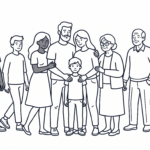
    Group of People

    When we are in our teens and twenties, our approach to friendship is very much based on the principle of “more is better.” We wanted to be part of the crowd, we wanted to be invited to every party, and we collected acquaintances like shiny pennies. If you look at the younger generation today on their smartphones, they have thousands of digital “friends” on Facebook or Instagram, most of whom they wouldn’t recognize if they bumped into them down the local high street.

    But as the decades march on, a wonderful piece of practical wisdom begins to dawn on you.

    You realize that a massive social circle is incredibly high-maintenance. It involves endless obligations, birthdays you can’t afford, social dramas that don’t matter, and sitting through hours of polite, mind-numbing small talk with people you don’t actually like very much.

    By the time you reach retirement, your physical and mental energy are premium commodities. You wouldn’t leave a leaky tap running in your house to waste water, so why would you let draining, boring, or toxic people waste your limited time? It is time to run a thorough social audit and realize that when it comes to chums, quality beats quantity every single day of the week.

    🧛 Beware the “Emotional Vampires”

    We all have at least one of them in our lives. This is the friend who only ever calls you when something has gone wrong.

    The phone rings on a Tuesday evening, you pick it up, and before you’ve even had a chance to ask how their week is going, they launch into a ninety-minute monologue about their sciatica, their ungrateful children, or a minor dispute they’ve had with a neighbour over a garden hedge.

    They use you as a human emotional dustbin. You listen, you validate them, you offer sensible advice, and when they finally hang up, they feel lighter than air. You, on the other hand, are left sitting on the settee feeling completely hollowed out, staring at the wall, needing a stiff drink or a lie-down in a dark room just to recover.

    The Hard Truth: True friendship is a two-way street; it requires an equal exchange of traffic. If a relationship consists entirely of you giving and them taking, they aren’t a friend. They are a parasite in a cardigan.

    ✂️ The Civilised Art of the “Quiet Drift”

    When you decide a friendship is no longer serving your health or wellbeing, you don’t need to make a massive, dramatic scene. You don’t need to stand up in the middle of a garden centre café, slam your teacup down, and announce that you are breaking off all diplomatic relations. We aren’t characters in a television soap opera.

    Instead, you deploy the masterly British tactic of the Quiet Drift.

    You simply become delightfully, politely, and consistently unavailable.

    • If they invite you out for an afternoon of looking at antique clocks that you have absolutely no interest in, you smile and say, “Oh, I’d love to, but I’ve got a rather hectic week with the family/the garden/the boiler, so I’ll have to take a raincheck.”
    • If they send you a three-page text message complaining about the local council, you wait 24 hours to reply, and send back a brief, neutral: “Gosh, sounds stressful. Hope it gets sorted!”

    Eventually, the emotional vampire will realize that the tap has run dry. They will quietly move on to find another unsuspecting soul to dump their rubbish on, leaving you with your peace of mind completely intact.

    🏆 The “Inner Circle” Blueprint

    So, if we are clearing out the dead wood, what should a proper, gold-standard, late-life friendship actually look like? In your golden years, your inner circle should be strictly limited to a handful of people who meet three simple criteria:

    1. The Low-Maintenance Clause

    A true friend is someone you can completely ignore for six months because life got busy, but the moment you sit down together for a pint or a coffee, you pick up exactly where you left off without a single ounce of guilt or awkwardness. There are no passive-aggressive comments like, “Oh, look who decided to reappear!”

    2. The Shared Nonsense Detector

    Life is far too serious to spend it around people who are permanently offended or stuffy. You need friends who share your specific, slightly cynical, time-tested sense of humour. Someone who can look at the absurdities of the modern world with you, roll their eyes, and have a proper, belly-shaking laugh over a biscuit.

    3. The Emergency Wardrobe Test

    Ask yourself this question: If you had to move a massive, heavy, awkward mahogany wardrobe down a narrow flight of stairs at 7:00 AM on a rainy Saturday morning, which of your friends could you call? The ones who would turn up with a flask of tea and a pair of sturdy work gloves are your real friends. The ones who would make an excuse about their lower back are just acquaintances. Keep the wardrobe-movers; politely distance the rest.

    The Bottom Line

    You have spent a lifetime earning the right to be entirely choosy about who gets to sit at your table. Your time is short, your peace is precious, and your settee is comfortable.

    Do not squander your retirement filling social calendars out of a misplaced sense of guilt. Prune the tree, treasure the few genuine gems who make you laugh and keep you grounded, and leave the high-maintenance drama to the youngsters who still have the energy for it.

  • Let’s Talk About the F-Word: Facing Our Fears of Getting Older (With a Smile)

    Walking couple

    Let’s be completely honest with each other: nobody wakes up on their fiftieth, sixtieth, or seventieth birthday, looks in the mirror, and shouts, “Hooray, more wrinkles and creaky knees!” Getting older is a universal human ride, but it’s one we often approach with a bit of trepidation. It’s entirely normal to have a quiet worry about what’s down the road. Whether it’s a sudden tweak in your lower back or a glance at the utility bills, those anxieties can start to pile up.

    But if we drag those fears out into the open, look them in the eye, and add a healthy dose of perspective, they lose a lot of their power. So, let’s unpack the big worries—and then look at why getting older might actually be the best strategy you’ve ever pulled off.

    The Three Big Categories of Worry

    When you boil down all our anxieties about ageing, they usually sit in three distinct buckets:

    1. The Changing Machinery (Physical Concerns)

    Let’s not sugarcoat it: as the odometer ticks up, the factory settings on our bodies adjust. The internal plumbing might require a bit more attention, the bones and joints can crackle like a bowl of Rice Krispies in the morning, and our vision requires a changing rotation of spectacles.

    The big fear here isn’t just the physical changes; it’s the worry of losing our mobility, our sharp memory, or our ability to just pack a bag and travel whenever we fancy.

    2. The Identity Shift (Psychological Challenges)

    When you retire, you don’t just leave a job; you leave a daily structure and an identity. Combine that with children moving away or the inevitable grief of losing old friends, and it’s easy for loneliness to creep in. Many people quietly fear losing their dignity, or being viewed by the younger generation as “less capable” just because they’ve lived a bit longer.

    3. The Wallet and Independence (Financial & Social Aspects)

    Then there’s the practical stuff. With the cost of living bouncing around, we all worry about making our pensions stretch. Underneath that is the deep-seated British dread of “becoming a burden” to our families or losing the independence of living in our own homes.

    The Good News: You Are in the Driving Seat

    While we can’t stop the clock, we have an immense amount of control over how the machine runs. Healthy ageing isn’t about running marathons; it’s about simple, daily investments:

    • Keep the wheels moving: A daily walk, a bit of gardening, or a gentle swim keeps the joints oiled and drastically reduces the risk of falls.
    • Feed the engine properly: A balanced diet keeps your energy levels steady and your brain firing.
    • Keep the gears turning: Learning a new hobby or a quirky skill forces your brain to rewire itself and build new pathways.
    • Stay in the loop: Joining a local club, volunteering, or just having a regular natter over coffee is the ultimate antidote to isolation.

    The Ultimate Silver Lining (Why I Should Have Got Older Earlier!)

    But here is the real secret that the youth-obsessed media will never tell you: getting older comes with some absolutely magnificent benefits. In fact, take it from me: it’s really not that bad at all. In many ways, age is the ultimate master-key to freedom.

    Think about it. If I want to be a bit grumpy today? And I do very often, as others will testify. People just shrug and think, “Oh, it’s just because they’re older.” If I want to have a proper moan at a company for bad customer service? It’s excused because I’m a senior. If I simply cannot be bothered to go to an awkward social event? I can blame my joints or my bedtime, and no one questions it! It is an endless supply of brilliant excuses.

    The True Wisdom of Age: In reality, the absolute best part of living longer is that you finally learn the true value of time.

    When you are young, you spend all your energy racing around, growing up, trying to please everyone, and wasting precious hours worrying about what people think.

    Looking back, I honestly think I should have gotten older earlier! If I had, I could have saved myself a lifetime of politeness and just been a little bit more HONEST with people from the start. You realise that your time is valuable, your boundaries matter, and you no longer have any patience for nonsense.

    So yes, the machinery might squeak occasionally, but the driver has never been wiser, freer, or more authentic.

    And still a GRUMPY Wise Old Head.

  • The Great Cushion Conspiracy: Why Your Living Room Settee is Gunning for Your Lower Back

    Couple on a Sofa

    There comes a specific, undeniable milestone in life where sitting down ceases to be a passive activity and becomes a major tactical operation.

    When you are in your twenties, you can fling yourself onto any surface—a beanbag, a hard wooden floor, a concrete step—and bounce right back up without a second thought. But fast forward a few decades, and the modern living room sofa changes from a cozy haven into a strategic trap.

    We all know the feeling. You find yourself invited over to a younger relative’s house, and they proudly point you toward their brand-new, ultra-plush, ultra-deep designer sofa. It looks like a cloud. You lower yourself into it, sink down about four feet, and instantly realize your mistake. You are trapped. Your knees are now higher than your chin, and you know with absolute certainty that getting back out of this thing is going to require a crane, three levers, and a theatrical soundtrack of huffs, puffs, and a loud, involuntary groan.

    Meanwhile, the younger folk in the room gracefully glide to their feet like gazelles, giving you that slightly amused look that says, “Oh dear, the old suspension is going.”

    But here is the secret: your spine isn’t falling apart. You are simply the victim of a modern furniture design conspiracy.

    Why the “Comfy” Sofa is the Enemy

    The human spine is a marvelous piece of engineering. When you are standing up, it naturally curves like a gentle, elegant “S” shape. This shape distributes your body weight perfectly and keeps your muscles relaxed.

    The trouble with modern, deep, marshmallow-soft sofas is that they force your spine to do the exact opposite. They collapse under your weight, tilting your pelvis backward and slouching your lower back into a rigid “C” shape.

    The Result: Your back muscles have to work like absolute trojans just to keep you upright. When you sit like that for an hour while watching The Chase, the blood flow to those muscles drops, the ligaments stretch out, and the moment you try to stand up… Ouch. Everything has locked solid.

    How to Outsmart Your Furniture

    You don’t need to throw out your favorite settee and replace it with a hard wooden church pew. You just need to apply three simple, cost-free adjustments to turn a back-breaking trap into a supportive seat.

    1. The Rolled-Towel Trick

    If your sofa is too deep, your lower back is left dangling in mid-air with no support. To fix this, take a standard bath towel, roll it up tightly until it looks like a Swiss roll, and tuck it horizontally right behind the small of your lower back. Alternatively, use a small, firm cushion. You want something that pushes your lower spine slightly forward, restoring that natural “S” shape. The relief is usually instant.

    2. Check Your Hips and Knees

    As a golden rule for your joints, your knees should never be higher than your hips when you are sitting down. If your knees are pointing skyward, it places immense pressure on your lower back and makes standing up incredibly difficult. If your sofa is too low, try sitting on a firm, flat scatter cushion to raise your seat by an inch or two.

    3. The 30-Minute Circuit Breaker

    Our bodies were simply not designed to stay completely still for hours on end. Even if you have built the ultimate supportive cushion fort, set a mental timer. Every time the adverts come on the television, or every 30 minutes while reading, make yourself stand up, roll your shoulders, and take a quick thirty-second stretch. It resets the muscles and prevents them from setting like wet concrete.

    The Bottom Line

    The next time you struggle to get out of a deep sofa, don’t blame your age. Blame the furniture designer who prioritized “looking cozy” over actual human anatomy.

    By firming up your seat, packing out the lower back support, and refusing to let your knees rise above your hips, you can enjoy your evening telly in total comfort. And the next time you visit those younger relatives? You can navigate their trendy, deep sofas with the grace of a gymnast—leaving them wondering what your secret is.